There is an old joke among physicists that fusion energy is always thirty years away, and always will be. For seven decades the promise of limitless, clean power drawn from the same reaction that lights the sun has hovered just beyond reach. In 2026, for the first time in a long time, that joke started to sound out of date. The science took a concrete leap forward, and the money followed it in a way that suggests the world's biggest investors now believe the finish line is real.
Fusion is, in essence, an attempt to bottle a star. Where today's nuclear plants split heavy atoms apart, fusion forces light atoms together, releasing enormous energy with no long-lived radioactive waste and no risk of a meltdown. The catch has always been the same: to make it work on Earth you must heat matter to more than a hundred million degrees and hold it steady, and holding it steady is where the dream has always broken down.
The headline moment came from South Korea. In February 2026, the KSTAR reactor, operated by the Korea Institute of Fusion Energy, sustained plasma at 100 million degrees Celsius for 102 seconds, more than double its own previous record of 48 seconds. The result was independently verified by the International Atomic Energy Agency, and many in the field called it the most significant fusion milestone since the United States' National Ignition Facility first achieved ignition in December 2022.
The number matters because time is the hard part. Reaching fusion temperatures for a flicker of a second is difficult enough; keeping a churning, hundred-million-degree plasma stable and contained for a minute and a half is a different order of achievement. Every extra second proves that the physics of a controlled, continuous fusion reaction, rather than a brief burst, is within reach.
For most of its history, fusion was the domain of slow, government-funded laboratories. That has changed dramatically. Private fusion companies have now raised roughly $9.8 billion in total, and some of the most powerful names in technology are placing large bets. Commonwealth Fusion Systems, backed by around $1.8 billion including investment from Google and Breakthrough Energy Ventures, is building a demonstration reactor called SPARC in Massachusetts and aims to show net energy generation in 2027. Its high-temperature superconducting magnets operate at 20 tesla, roughly forty times the strength of a hospital MRI.
Others are close behind. Helion Energy, backed by a multi-billion-dollar commitment associated with OpenAI's Sam Altman, has signed a landmark agreement to sell power to Microsoft and is targeting its first electricity generation as soon as 2028. In a quiet but important shift, the U.S. Nuclear Regulatory Commission has formally separated fusion from traditional nuclear fission in its rules, clearing a regulatory path for these plants to connect to the grid.
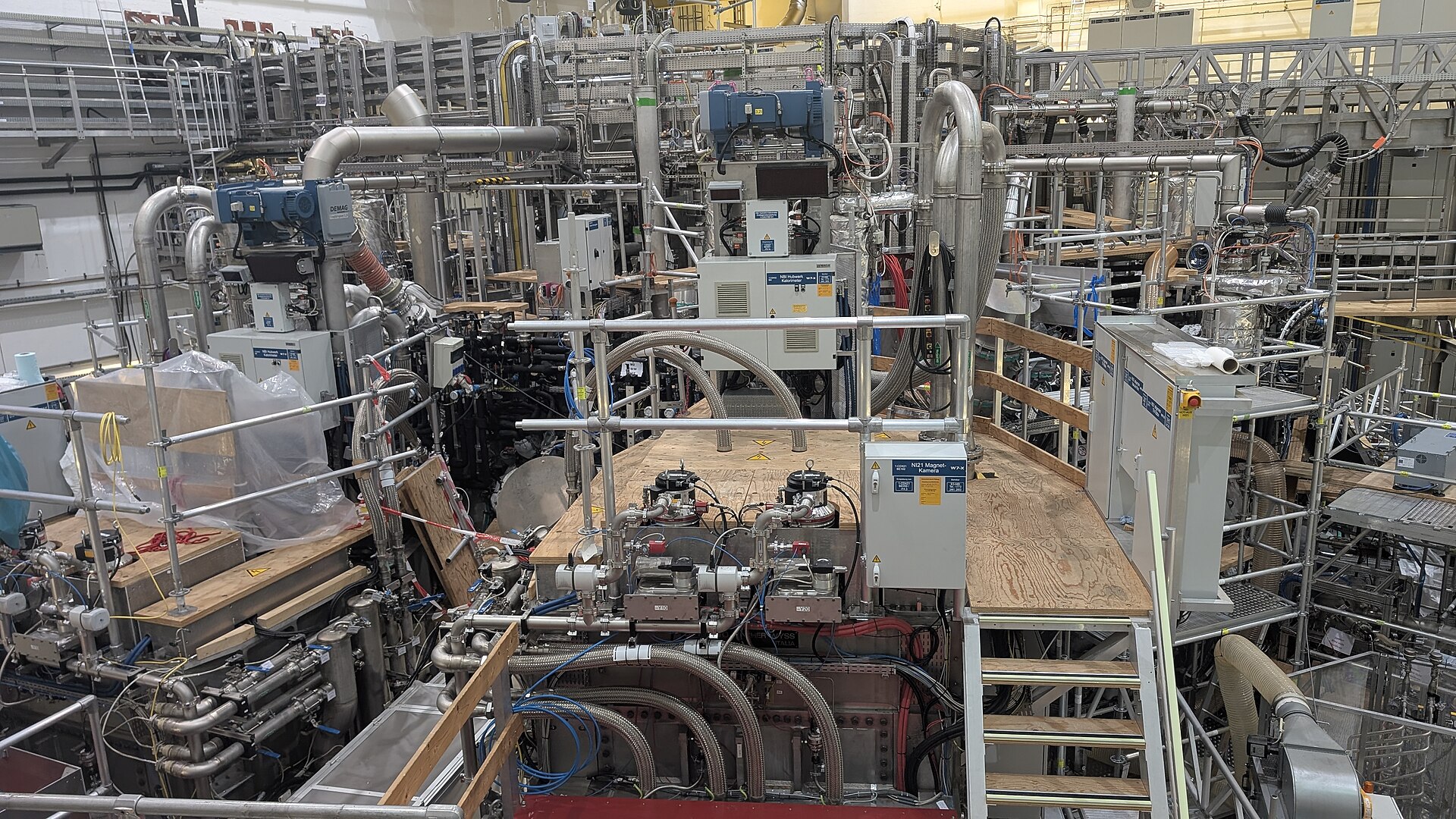
There is no single design winning the race, which is part of what makes this moment exciting. KSTAR and SPARC are tokamaks, using powerful magnetic fields in a doughnut-shaped chamber. Machines like the Wendelstein 7-X in Germany are stellarators, a twisted variant designed for steadier, continuous operation. Meanwhile TAE Technologies reported achieving hydrogen-boron fusion at commercially relevant energy ratios, a harder reaction that produces virtually no radioactive waste at all. Several distinct approaches are advancing in parallel, and any one of them could prove to be the breakthrough path.
None of this means the lights in your home will run on fusion soon. Most experts still expect commercial fusion power plants to arrive in the 2040s or 2050s, and the history of the field is a graveyard of optimistic predictions. What changed in 2026 is not the arrival of fusion power but the credibility of the path toward it. Records that were supposed to take years fell in months, serious companies committed serious money, and regulators started preparing for a grid that includes it.
The progress of the year is easiest to see as a short list:
The promise of fusion has disappointed so many times that healthy skepticism is warranted. But skepticism should track the evidence, and the evidence in 2026 moved in one direction. A star was held a little longer, the smartest money in the world lined up behind the effort, and the machinery of law and industry began to prepare for a power source once dismissed as perpetual fantasy. Fusion may still be years away. It is no longer, however, the same distance away it has always seemed, and for a planet in search of clean, abundant energy, that shift in trajectory is the most hopeful science story of the year.