Every so often a single summer rearranges the way a sport thinks about itself. The summer of 2026 was one of those. Over a few sun-baked weeks, football staged its biggest tournament ever, crowned a new world champion, tore up more than forty record books, and then, almost before the confetti had been swept away, plunged into the most expensive transfer window the game has ever seen. If you looked away for a fortnight, you missed history.
There are really two stories tangled together here. One is what happened on the pitch across Canada, Mexico and the United States. The other is what happened to the market afterwards, when clubs looked at a World Cup full of new heroes and reached for their checkbooks. Told together, they explain why 2026 already feels like a hinge point for the sport.
At the center of it all stood Spain. La Furia Roja were crowned world champions for the second time, sixteen years after their first, beating Argentina in a final they controlled from almost the first whistle. The decisive moment came in extra time, when the substitute Ferran Torres struck in the 106th minute to break the deadlock, handing Spain a 1-0 victory and the trophy.
The single goal flattered Argentina. Reduced to ten men after Enzo Fernandez was sent off for a second bookable offence, they were pinned back as Spain dominated the ball and the chances, dictating the rhythm so completely that the beaten finalists barely had a sight of goal. It was less a duel than a demonstration, the kind of performance that will be replayed for a generation of young Spanish players raised to keep the ball and trust the pass.
The foundation was defensive as much as it was beautiful. Goalkeeper Unai Simon kept seven clean sheets in eight matches, the most ever registered in a single World Cup, and Spain became the first team in the tournament's history to lift the trophy having conceded just one goal across its entire run. Championships are built on exactly this kind of unglamorous discipline, and Spain had it in abundance.
This was a World Cup unlike any before it. For the first time the tournament expanded to 48 teams and was shared across three host nations, turning a familiar month-long event into a sprawling continental festival that stretched from Vancouver to Mexico City. The sheer size of it changed the texture of the competition, giving smaller nations a stage and fans a schedule that never seemed to stop.
With more teams came more football, and with more football came a flood of records. More than forty fell in total. The most eye-catching was the goal count: 308 goals across the tournament, shattering the 172 scored at the 2022 edition. Some of that is simple arithmetic from a bigger field, but plenty of it came from an attacking spirit that the expanded format seemed to encourage rather than dull.
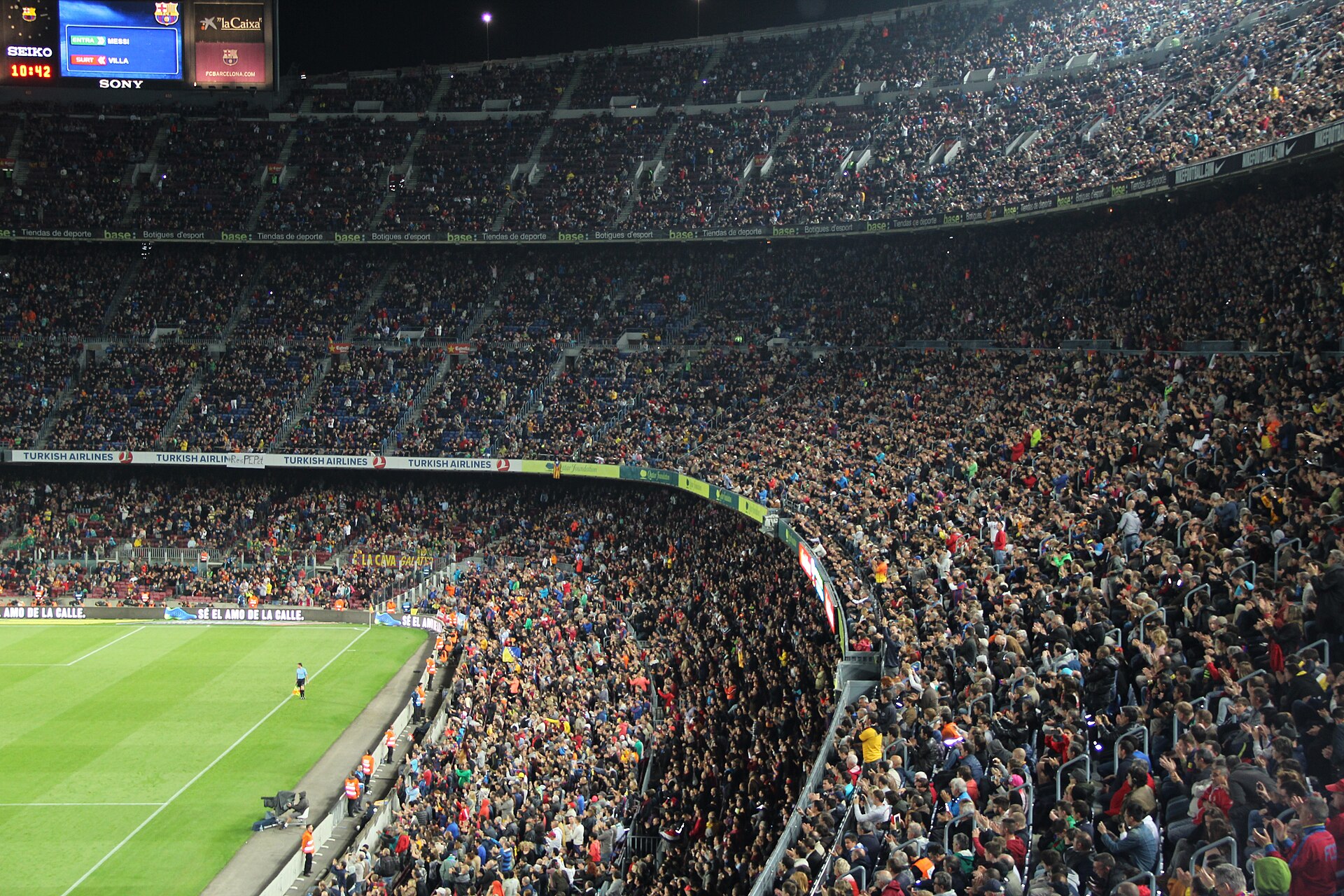
The crowds matched the spectacle. Almost seven million spectators passed through the turnstiles, with organizers reporting that 99.7% of available seats were filled. Television audiences soared to match. For all the romance, though, the numbers also told a harder story of record ticket prices and ever-deeper commercialization, and more than one observer left wondering whether the tournament that changed football forever had also priced out some of the people who love it most.
If Spain owned the ending, an old master owned much of the story. Lionel Messi, at 39, opened Argentina's campaign with a hat-trick against Algeria and finished the tournament with eight goals, enough to drag his side all the way to the final and to make him the all-time leading scorer in the history of the men's World Cup. He was pipped to the Golden Boot by France's Kylian Mbappe, who ended with ten, but it was the sort of farewell lap that only the truly great are granted, a reminder that class does not simply evaporate with age.
There was something fitting in the contrast. As Messi and his generation took their bows, it was a young, relentless Spain that lifted the trophy, and the torch passed almost visibly from one era to the next. The summer belonged to both: to the veteran writing his last great chapter, and to the newcomers already writing their first.
A World Cup does not just make heroes; it makes prices. Every standout performance inflates a player's value, and by the time the transfer window opened in earnest, clubs were bidding as if money had lost its meaning. The overarching theme was Premier League dominance, with English clubs shattering their own spending records almost casually.
Chelsea set the pace, paying a reported £117 million to sign Morgan Rogers from Aston Villa, the biggest deal of the entire window. What made the figure so striking was how quickly it toppled the previous British record, which had been set only weeks earlier when Elliot Anderson moved from Nottingham Forest to Manchester City for £116 million. A national record that had stood for a matter of days was already history.
The spending did not stop there. Tottenham Hotspur brought in the Italy midfielder Sandro Tonali for an initial £92.5 million, a fee capable of reaching £100 million through add-ons and one of the largest ever paid by a club not in the Champions League. Chelsea, meanwhile, went through the market like a shopper with a full trolley, adding Maxence Lacroix for £51 million, Geovany Quenda for £43.5 million and Marco Palestra for £43 million, while Liverpool's move for Ronald Araujo was widely graded as a risk born of need.
Reduced to a handful of numbers, the scale of it all becomes almost comic:
Step back and the summer of 2026 reads like a snapshot of where football is heading: bigger, richer, faster and more commercial than ever. The expanded World Cup proved there is an almost bottomless appetite for the game, and the transfer window proved the money is there to feed it. For the biggest clubs and their fans, that is cause for celebration.
But the same records that thrilled the sport also carry a warning. When ticket prices climb and a handful of wealthy clubs hoover up the best talent, the gap between the game's haves and have-nots widens with them. The summer that supersized football was glorious to watch. The real question, now that the noise has faded, is whether the sport can grow this fast without leaving part of its soul behind.