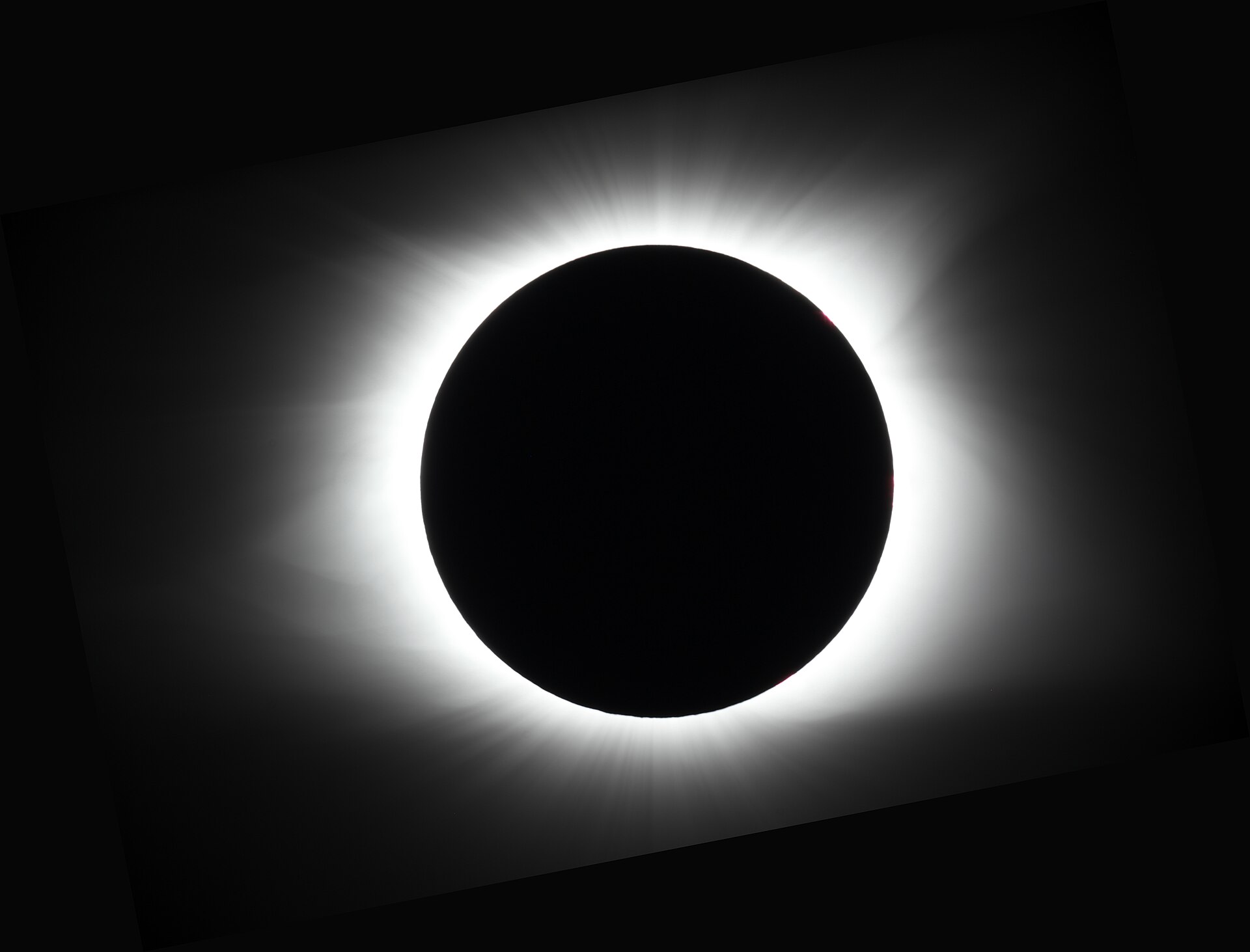
Most trips are planned around a place. This one was planned around a moment. On 12 August 2026, the Moon slid perfectly in front of the Sun and dragged a ribbon of shadow across the top of the world, delivering the first total solar eclipse visible from mainland Europe in 27 years. For a few precious minutes, day turned to an eerie twilight over Iceland and northern Spain, and for the travelers who had crossed oceans to be standing in exactly the right spot, it was worth every mile.
An eclipse is the rarest kind of destination, because it comes to you only if you go to it, and only for a heartbeat. The path of totality, the narrow band where the Sun disappears completely, traced a remote route across Siberian Russia, eastern Greenland, the west coast of Iceland, northern Spain and the very tip of Portugal. Miss the band by a few kilometres, or the moment by a few minutes, and you miss it entirely.
The last time a total solar eclipse swept across mainland Europe was August 1999, a date still remembered by a generation who watched it as children. In the years since, there have been eighteen total eclipses somewhere on Earth, but only twice did the path so much as clip the edge of the continent, brushing Georgia and Russia in 2006 and the far northern outposts of the Faroe Islands and Svalbard in 2015. For most Europeans, 2026 was the first real chance in a lifetime to stand under totality without leaving home soil.
Of all the places the shadow touched, two mattered most to travelers. Iceland and Spain hold the vast majority of the population along the path, and they became the twin capitals of the event. Iceland offered raw, cinematic landscapes, waterfalls and lava fields, as a backdrop to the darkening sky, while northern Spain offered a comfortably wide path of totality, around 290 kilometres across, along with the warmer, clearer August weather that eclipse chasers pray for.
The timing shaped the experience too. Over Iceland the Sun went dark in the late afternoon and early evening, hanging low and dramatic over the North Atlantic. In Spain, totality arrived even later, in the last light of the day, with the eclipsed Sun sitting close to the horizon shortly before sunset, a rare and painterly sight that photographers had waited years to capture.
Events like this have created a distinct kind of traveler: the eclipse chaser, who plans holidays years in advance around the movements of the Moon. For them, an eclipse is not a sightseeing add-on but the entire reason for the journey, and they will fly across the planet, book remote guesthouses years ahead and study cloud forecasts obsessively for a window that lasts barely two minutes. In 2026 their ranks swelled with first-timers, families and photographers, all converging on the same thin line drawn across the map.
What makes people go to such lengths is impossible to fully explain to anyone who has not felt it. In the seconds before totality the light turns strange and silver, the temperature drops, birds fall quiet, and then the Sun vanishes behind a black disc ringed by its shimmering corona. The maximum totality for this eclipse lasted 2 minutes and 18 seconds, a fragment of time that chasers describe as one of the most moving experiences of their lives. Then the diamond ring flares, daylight rushes back, and it is over. You cannot stream it, pause it or repeat it. You simply have to be there.
For anyone tempted to plan their own journey to totality one day, the essentials of the 2026 event tell the story:
In a year full of talk about overtourism and crowded hotspots, the great eclipse of 2026 was a reminder of a purer reason to travel: not to tick off a landmark, but to witness something you can experience nowhere else and no other way. The travelers who lined the coasts of Iceland and the hills of northern Spain did not go for a view they could have Googled. They went for two minutes of wonder that no screen can deliver. Some journeys are about where you go. The best ones, like this, are about being somewhere extraordinary at exactly the right time.