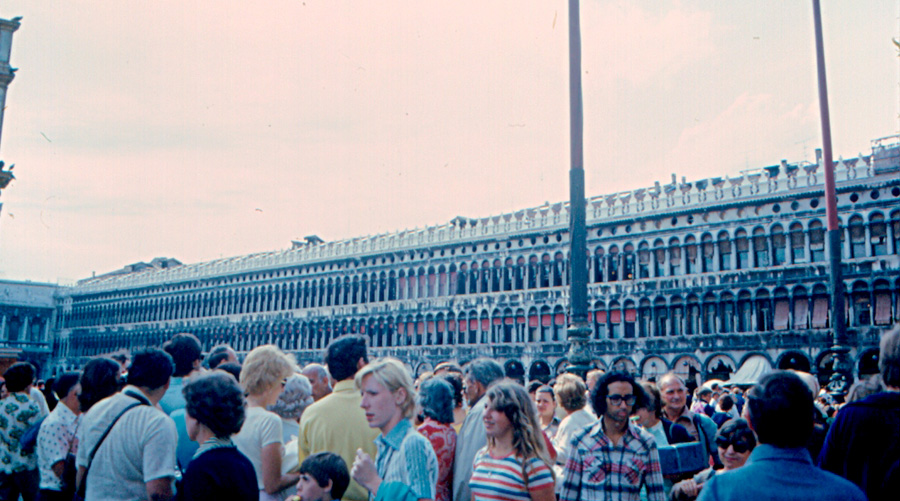
For years the travel industry measured success in a single direction: more. More arrivals, more flights, more records broken. In 2026 the numbers duly arrived, bigger than ever, and something unexpected came with them. The most beautiful and beloved places on earth began, politely at first and then loudly, to push back. This was the year overtourism stopped being a buzzword and turned into a genuine reckoning.
The scale of the rebound is hard to overstate. The post-pandemic peak, once treated as a high-water mark, has now been comfortably surpassed. Chinese travelers alone are projected to make a record of more than 225 million trips abroad this year. Thailand welcomed over 18.5 million international visitors in just the first seven months. Spain, perennially one of the world's favourite destinations, kept breaking its own records as arrivals from Britain, Germany and France poured in.
Record visitation is the defining feature of travel in 2026, and for the businesses that depend on tourism it is a windfall long awaited. Hotels are full, airlines are busy and whole regional economies are riding the wave. But the sheer density of people has begun to change the character of the places they come to see, turning famous streets and squares into slow-moving rivers of visitors from morning until night.
Nowhere is the tension sharper than in the places that have become almost too popular to function. Barcelona, the Canary Islands and the Balearic Islands rank among the most visited spots in Europe, and all three are wrestling with the visible costs of that success: soaring housing prices as homes become short-term rentals, clogged roads, strained infrastructure and mounting environmental pressure. In several of these places residents have taken to the streets in protest, a sight that would have seemed unthinkable when tourism was seen only as a blessing.
The mood has hardened enough that travel guides now warn about it directly. Fodor's, among others, has published a widely read list of destinations it suggests travelers reconsider for 2026, not because they are unsafe or unappealing but because they are, quite simply, overwhelmed. It is a striking inversion of the usual advice: instead of urging you to go, the experts are asking you to think twice.
That unease is quietly redrawing the map. A growing number of travelers are deliberately steering away from the crowded hubs in search of authentic experiences in lesser-known places. Countries and regions that rarely topped anyone's list, from Poland to the calm landscapes of southern Finland, are seeing new interest precisely because they offer what the famous cities can no longer guarantee: room to breathe. It is the same instinct driving the shift toward slower, deeper trips built around food, markets and local life rather than a checklist of monuments.
The strain shows up in different forms around the world. Japan is at a delicate crossroads, where a weak yen has fuelled a surge of spending even as some underlying arrival figures wobble, leaving the country to enjoy the boom while bracing for its costs. In the United States, even the vast open spaces of the national parks are feeling it, with Grand Canyon, Yosemite and Yellowstone now grappling with the same overcrowding that once seemed a purely European problem.
The tension of 2026 is captured in a handful of figures:
The reckoning of 2026 does not mean the end of travel, or anything close to it. What it marks is the end of an assumption, the comfortable idea that more visitors is always better. Destinations are beginning to shift from chasing growth to managing it, and the smartest travelers are shifting too, trading the crowded postcard view for something slower, quieter and often more rewarding. The world is still worth seeing. In 2026 it simply started asking us to see it more thoughtfully.