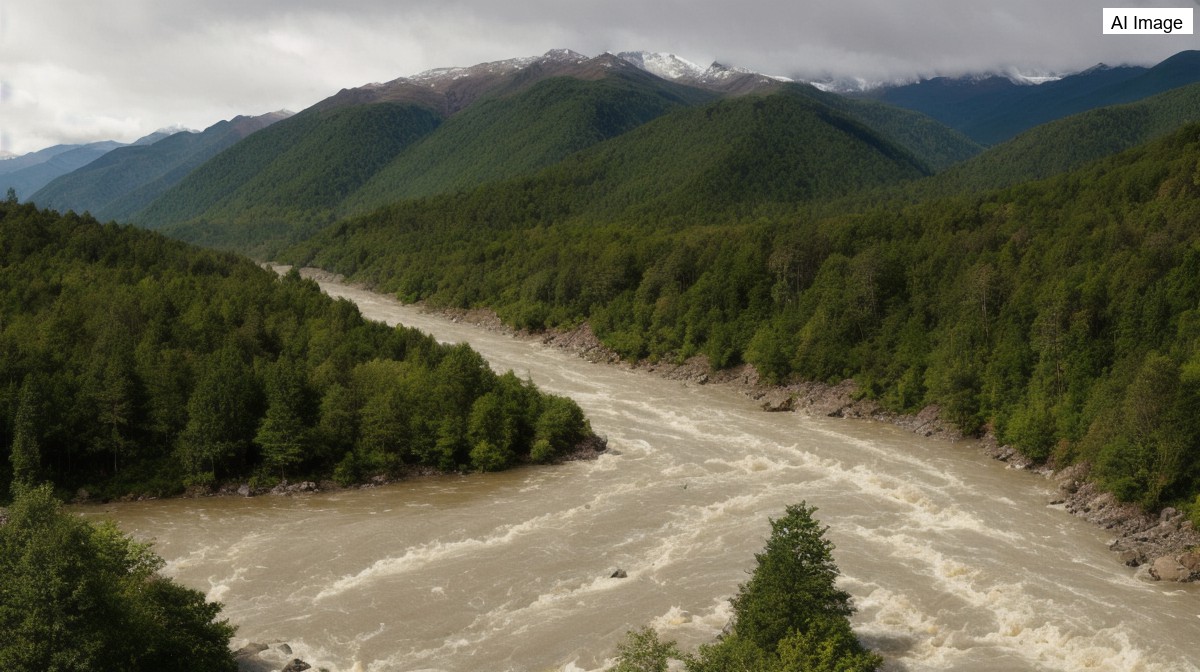
Search and rescue efforts are entering a fifth day in Nepal after a catastrophic landslide and flooding struck on Wednesday. According to Euronews, the confirmed death toll from the flood disaster in Nepal and Tibet was put on Sunday at more than 800, while more than 3,000 people remain missing, among them hundreds of foreign tourists including visitors from countries such as Ukraine, Russia, Kazakhstan and Belarus. CBC News reported that the search has centred on hydroelectric projects where hundreds of workers were present when the floods struck; the entrances to many tunnels have been blocked by thick mud, and a specialist team from China and India has been called in, with crews drilling holes into the earth to lower food, water and oxygen into one tunnel in case workers were still alive. In total 933 hydropower workers are listed as missing, and the Nepalese government believes more than 100 could still be alive. Eyewitness News reported that at least 90 Americans are among the missing.
Search and rescue efforts are continuing in Nepal after a catastrophic landslide and flooding struck the country on Wednesday. According to Euronews, the confirmed death toll from the flood disaster in Nepal and Tibet was put on Sunday at more than 800, while more than 3,000 people remain missing. Rescue teams are still working to reach those who have not yet been accounted for in the aftermath of the disaster.
Euronews reported that the more than 3,000 people still missing include hundreds of foreign tourists, among them visitors from countries such as Ukraine, Russia, Kazakhstan and Belarus. Authorities have also warned residents of possible new flooding and have urged people in areas that were already hit by mudslides to remain especially vigilant in the coming days.
Further heavy rainfall and rising river levels have prevented Nepalese rescuers from reaching hundreds of workers at destroyed hydroelectric power plants, according to Euronews. In total, 933 employees of these facilities are listed as missing. The Nepalese government believes that more than 100 of the workers could still be alive, trapped inside the tunnels of the hydropower plants.
According to CBC News, the rescue effort has entered a fifth day, with the search centring on hydropower projects where hundreds of workers were present when the floods struck. CBC reported that in some cases the workers received a warning and went into the tunnels, but the entrances to many of these tunnels have since been blocked by thick mud, which has been a major challenge for the Nepalese search crews.
CBC News reported that a specialist team from China and India has been called in to work on the tunnels. At one location, crews drilled holes into the earth to lower food, water and oxygen into one of the tunnels in case workers were still alive inside. A new video released by the Nepalese army showed efforts to rescue people trapped inside a flooded tunnel at a hydroelectric power project.
Eyewitness News described a race against a closing window to find survivors, with rescue teams battling monsoon downpours and dangerous terrain. According to the broadcaster, heavy rain and fog in Rasuwa, the hardest hit area, repeatedly grounded rescue helicopters while many bridges and roads had been washed away. Even so, there were moments of hope: a seven-year-old girl was pulled alive from the rubble after rescuers heard her cries, and a three-story school where more than 900 students had been present was reported to have been evacuated with all of them escaping alive thanks to the quick thinking of the principal.
Among those still missing are a number of Americans. Eyewitness News reported that at least 90 Americans were among the missing, including a mother and her 14-year-old daughter visiting from New York, a New York couple on a spiritual pilgrimage, and a couple from Bloomfield, New Jersey, whose families have been waiting for news about their relatives.
In an update, a US State Department spokesperson told Eyewitness News that, as of early Sunday, approximately 85 Americans were unaccounted for, while nine Americans had been safely evacuated, and that the department was not aware of any US citizen deaths at that time. The spokesperson said the State Department had activated 3.6 million dollars in emergency humanitarian assistance and had a disaster area response advisor on the ground, coordinating with the Nepalese government in a region made difficult to reach by the devastation.
According to Eyewitness News, the landslide was as powerful as a magnitude 5.2 earthquake and was triggered by a chunk of glacier that fell. Eyewitness News reported that the water then pushed through at 40 miles per hour, destroying bridges and making streets and roads disappear as it moved through the affected region.
The disaster has been deeply felt within the wider Sherpa community. According to Eyewitness News, members of the Sherpa community gathered for a candlelight vigil, saying the first and foremost priority was to find as many survivors as possible while also supporting the families of those who had lost their lives. Help has begun to arrive from abroad and from within the diaspora, with the United States pledging aid and the United Sherpa Association leading a fundraiser in New York, while Euronews reported that more than 7,000 rescue workers have been deployed across the popular trekking region.
The scale of the rebuilding ahead is already coming into focus. According to MBC News, the Nepalese government has estimated that repairing the damage caused by the flooding could cost up to 5 billion dollars. The broadcaster reported that this figure is equivalent to roughly 10 percent of the entire size of Nepal's economy, underlining how heavily the disaster is expected to weigh on the country in the months and years to come.
The disaster has also left a number of South Korean workers unaccounted for. According to MBC News, nine South Koreans remained missing at a hydroelectric power plant construction site run by Doosan Enerbility, with a rescued site manager describing how the flood struck while he was inside a tunnel and left him unable to see anything. The broadcaster reported that the South Korean government had decided on a two-track search using both helicopters and overland routes, after Nepalese authorities declined a helicopter search citing safety and air congestion, and that footage filmed from a search helicopter showed the site buried in mud, with office and dormitory buildings washed away and only debris and a mud-covered bus left behind.