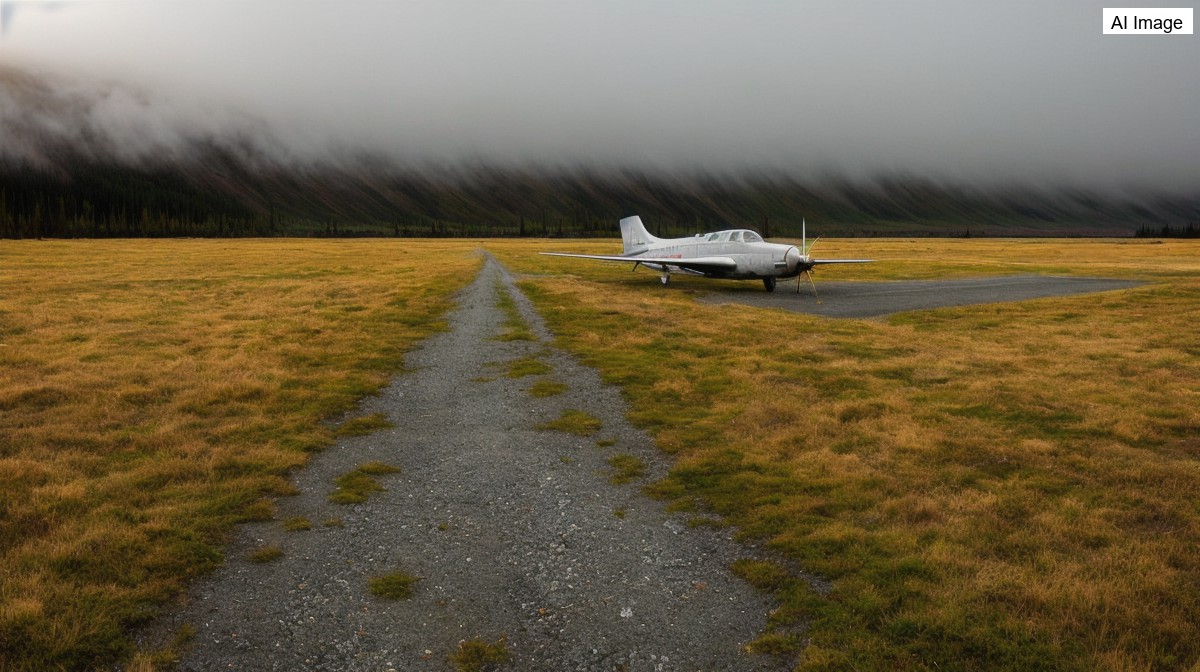
A charter plane has crashed at a remote military radar site in western Alaska, killing eight people on board. The accident happened at the Cape Newenham Long Range Radar Site, about 450 miles west of Anchorage, one of the isolated outposts that can only be reached by air. Investigators have begun the difficult task of piecing together what brought the aircraft down.
The aircraft involved was a Cessna twin turboprop, fitted with Honeywell turboprop engines, according to the National Transportation Safety Board. Investigators identified the airframe manufacturer as Cessna, part of Textron, and Honeywell as the engine maker, both of which are expected to take part in the inquiry as technical experts alongside the airframe and powerplant specialists.
The circumstances of the final moments are already coming into focus. According to the NTSB, the plane made one approach to the airport that ended in a missed approach, and the accident happened on the second attempt to land. The weather at the time was poor, and searchers had a difficult time locating the wreckage later in the afternoon in the challenging conditions.
The terrain around the airstrip added to the danger. Officials said the airport's runway 15 is surrounded by rising terrain, at the departure end as well as on both sides. The wreckage ended up roughly a quarter of a mile from the airport, in an area so remote that recovery will require a helicopter to reach the site before the wreckage can be moved and flown out.
The flight was tied to the work of the remote radar station itself, an installation reached by air to keep it supplied and staffed. Those on board included personnel connected to the U.S. Army Corps of Engineers along with contractors, a reflection of the military and support role the small airstrip plays. The NTSB said it does not release the names of victims, leaving that to the Army or the state troopers.
A full investigation is now under way. A senior air safety investigator from the NTSB's Western Pacific office in Seattle is leading the effort, with a team of 16 members traveling to Anchorage. The inquiry has been divided into groups covering meteorology and weather, operations, airworthiness and air traffic control, while the Federal Aviation Administration is sending an investigator from Washington to join them.
Investigators said they have strong data to work with as they reconstruct the accident. Radar at the site captured the sequence of events, giving them archived data and preliminary plots to begin telling the story of the flight. Much of the focus, officials indicated, will fall on what weather information was relayed to the pilots and whether it played a part in the crash, details the air traffic control group will examine closely.