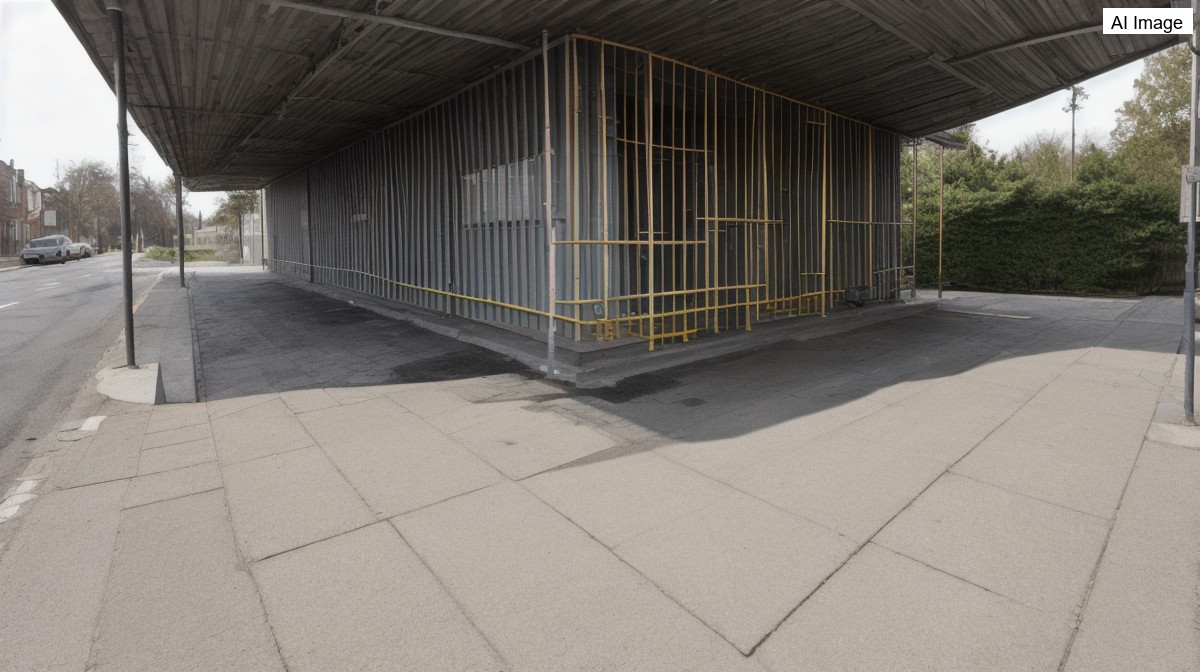
New York City has unveiled a set of new sidewalk shed designs that will start being put into use later this summer, part of an effort to rethink the dark, boxy scaffolding that has long lined the city's streets. Officials say the new look is meant to keep pedestrians safe while making the structures less of an eyesore.
One of the headline designs is a yellow version the city is calling the rigid shed. It is described as heavy duty and intended for major projects and new construction, the kind of long-term work that keeps scaffolding up for extended periods.
Alongside it is a blue version known as the flex shed, a lighter-duty structure meant for maintenance work and emergency repairs. Between the two, the city is trying to match the type of shed to the type of job, rather than relying on a single bulky design for everything.
The new sheds are also designed to be brighter and more open. City leaders say they come with better lighting and, in some cases, transparent roofs, which they argue not only keep people safe but also let more of the streetscape show through. The trade-off is cost, and it will be up to building owners to decide whether to pay for a new design or stick with the old style.
The Department of Buildings commissioner argued that the investment would pay off for owners in the long run, suggesting that a more attractive structure helps when trying to lease space or keep tenants happy. The pitch frames the redesign as practical as well as cosmetic.
On the question of safety, the engineer behind the designs said the new sheds meet the same loading criteria as the current ones, all in accordance with the New York City building code. Beyond simply looking better, the engineer said they are lighter and actually safer for pedestrians moving along the sidewalk. In all, six designs in different colors and materials have been approved, and they could begin covering streets later this year.
The city also changed some of the rules around putting up the sheds. A permit to erect one used to last an entire year, but now it has to be renewed every 90 days. Officials describe the change as a way to push building owners to take the sheds down more quickly once the work behind them is finished.