NASA's Nancy Grace Roman Space Telescope lifted off on 30 August 2026 aboard a SpaceX Falcon Heavy, beginning a three month journey to study dark energy, dark matter and distant planetary systems.
A powerful new eye on the cosmos is now on its way into space. NASA has successfully launched its Nancy Grace Roman Space Telescope, an observatory built to tackle some of the deepest questions in modern astronomy.
The mission has been years in the making, and its launch marks the start of a long journey rather than the end of one. Scientists around the world are watching closely, hoping the telescope will transform how we see the universe.
Liftoff from Florida

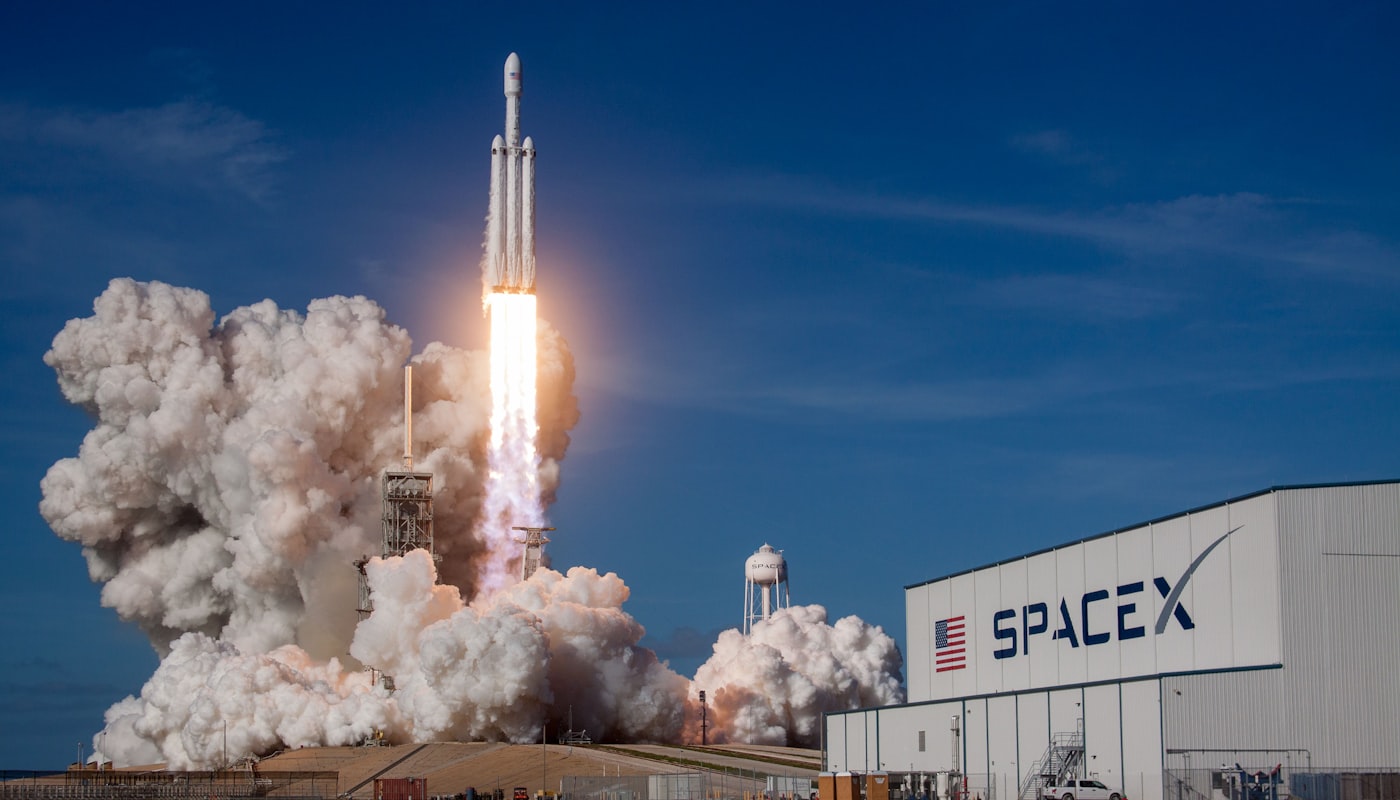
The telescope lifted off at 7:26 in the morning, Eastern time, on 30 August 2026. It rose from Launch Complex 39A at NASA's Kennedy Space Center in Florida, a historic site that has sent countless missions skyward.
The launch went ahead aboard a SpaceX Falcon Heavy, one of the most powerful rockets in service today. The successful liftoff drew applause from teams who had spent years preparing the observatory for this single moment.
The rocket that carried it
The Falcon Heavy is a giant by any measure. Its first stage is made up of a central core flanked by two side boosters, together housing 27 Merlin engines that generate more than 5 million pounds of thrust at launch.
Perched atop the central core, the rocket's second stage carried the Roman observatory itself. That upper section was responsible for placing the precious cargo on the correct path once the boosters had done their work.
A three month journey
Reaching orbit was only the beginning. Roman is now travelling on a three month journey covering around a million miles, heading for a special location known as the Sun and Earth L2 point, far beyond the Moon.
That distant orbit offers a stable and cold environment, ideal for a telescope that needs to observe faint light from the early universe. It is the same broad region that is already home to other major space observatories.
Hunting the dark universe
At the heart of the mission lies a profound mystery. Roman is designed to investigate dark energy, the unknown force thought to be driving the accelerating expansion of the universe, along with the equally puzzling dark matter.
These two components are believed to make up most of the cosmos, yet they remain almost entirely hidden from view. By mapping how galaxies are spread across space and time, Roman aims to bring them into sharper focus.
A wider eye than Hubble
One of Roman's greatest strengths is its enormous field of view, far wider than that of the famous Hubble Space Telescope. This allows it to survey vast stretches of sky and capture billions of stars and galaxies at once.
Beyond its work on the dark universe, the telescope will also carry out a statistical census of planetary systems, helping astronomers understand how common worlds like our own may be across the galaxy.
What comes next
For now, the team faces a careful period of testing. Once Roman reaches its orbit, engineers will spend weeks checking and calibrating its instruments before the science observations can properly begin.
NASA expects to share the telescope's first images by early 2027. If all goes well, those pictures could open a new chapter in the study of the cosmos, honouring the pioneering astronomer whose name the mission carries.
dark energy: covered better than most.
Good context around dark energy.
Great coverage of dark energy.
Same here.
Well said.
 Keep following Sophie TaylorHer next filing reaches you the moment it publishes, on her own subdomain.
Follow
Keep following Sophie TaylorHer next filing reaches you the moment it publishes, on her own subdomain.
Follow