
SpaceX has notched the 700th flight of its Falcon rocket family, a launch that also finished off a medium orbit satellite constellation. We look at the numbers behind the milestone.
Space enthusiasts had a notable anniversary to mark this month, as one of the world's busiest rockets reached a remarkable milestone. A single launch from Florida did more than deliver a handful of satellites to orbit; it also became the 700th flight in the history of a rocket family that has reshaped the modern launch industry. For anyone following the fast-moving world of spaceflight, it was a moment worth pausing over.
A milestone 700 flights in the making
The headline achievement was the sheer number of launches. According to reports, the mission marked the 700th flight of the Falcon rocket family operated by SpaceX. That total breaks down into 687 launches of the workhorse Falcon 9 and 13 flights of the larger Falcon Heavy. Reaching such a figure underlines how central these vehicles have become to putting satellites, cargo and crew into orbit for a wide range of customers around the globe.
A launch from the Florida coast

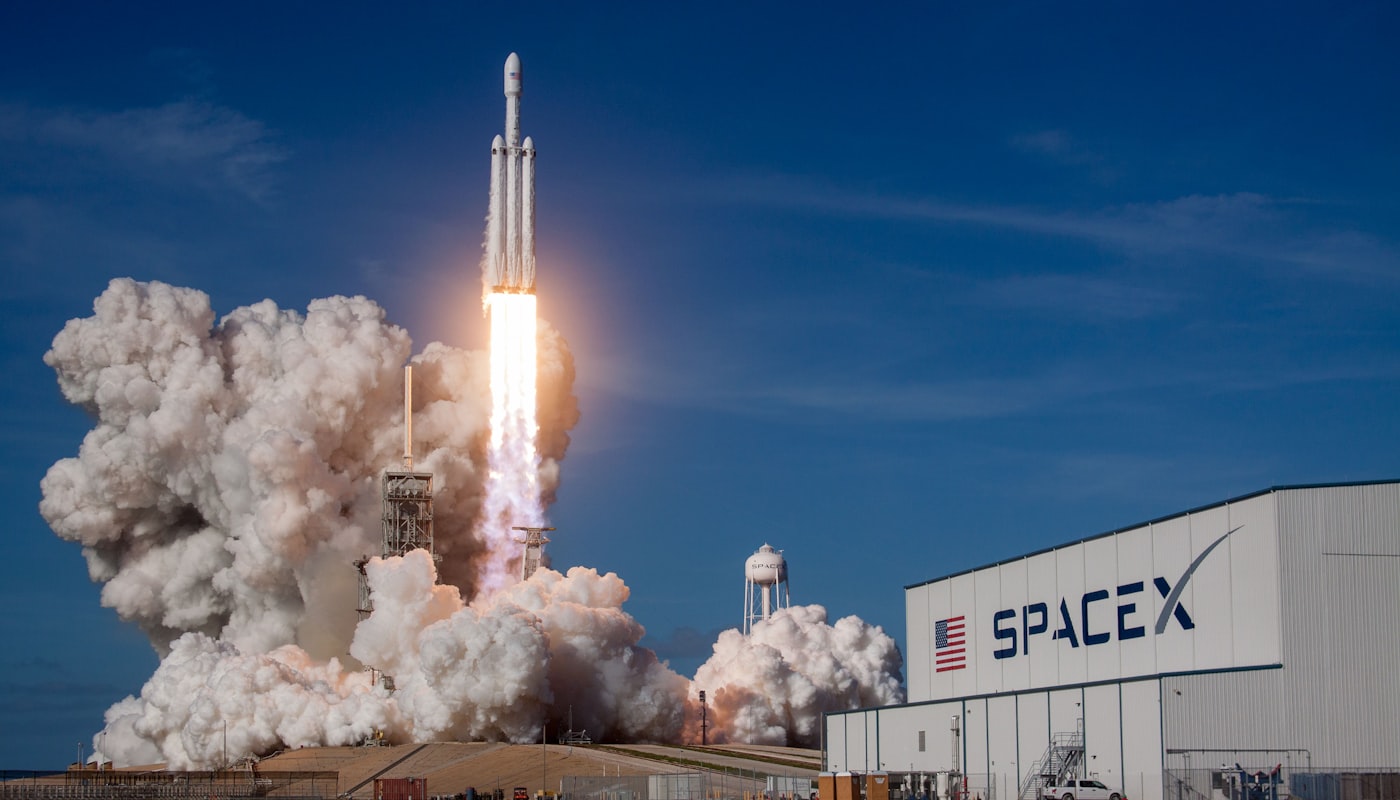
The record-setting flight itself was a familiar sight for launch watchers. According to reports, a Falcon 9 lifted off from Space Launch Complex 40 at Cape Canaveral Space Force Station in Florida at 2:49 in the afternoon local time, or 1849 GMT, on Sunday 13 September 2026. The mission carried a payload of communications satellites, continuing a steady rhythm of launches that has become a defining feature of the site.
Completing a constellation
This was not just any routine flight. According to reports, the rocket delivered the final three satellites of the O3b mPOWER constellation, operated by the satellite company SES. Known as F11, F12 and F13, the trio joined ten spacecraft already in service, bringing the full fleet to a total of thirteen. Completing a constellation in this way is a significant step, since it allows the operator to unlock the network's intended global coverage.
Built by Boeing, bound for medium orbit
The satellites themselves have an interesting pedigree and destination. According to reports, the three spacecraft were manufactured by Boeing and were sent toward medium Earth orbit, a region roughly 8,000 kilometres above the planet. That altitude sits well above the low orbits used by many imaging satellites, yet far below the distant belt where traditional communications platforms often sit, offering a useful balance between coverage and signal delay.
When the new satellites go to work
Getting to orbit is only the beginning of the story for these spacecraft. According to reports, the three newly launched satellites are expected to enter service by the middle of 2027, once they have finished raising their orbits and completed the necessary checkout procedures. This commissioning period is standard practice, giving engineers time to test each satellite thoroughly before it is trusted to carry live traffic for customers on the ground.
A well travelled booster
One of the most striking details concerns the rocket's first stage. According to reports, the booster used for the mission, identified by the tail number B1080, was flying for the twenty-ninth time. Its earlier assignments were varied, including four cargo runs to the International Space Station, the launch of the European Space Agency's Euclid space telescope, a satellite named Astra 1P for SES, and no fewer than twenty-two batches of Starlink satellites.
A safe return to the drone ship
As has become customary, the booster did not simply fall away and burn up after its job was done. According to reports, the first stage flew back and landed on a drone ship named A Shortfall of Gravitas, stationed out at sea. It was the 166th landing recorded on that particular vessel, and the 661st successful recovery of a Falcon booster overall, a tally that highlights just how routine these once experimental landings have become.
Why reusability changed the game
The repeated reuse of boosters is at the heart of the Falcon story. By recovering and reflying first stages many times over, an operator can spread the cost of building a rocket across numerous missions rather than throwing the hardware away after a single use. This approach has helped drive down the price of reaching orbit and has allowed a launch cadence that would have seemed almost unthinkable only a decade or so ago.
What medium Earth orbit offers
The choice of medium Earth orbit for this constellation is deliberate and worth understanding. Satellites in this band circle the planet higher than those in low orbit, so each one can see a larger slice of the surface at any moment, meaning fewer craft are needed for wide coverage. At the same time, they remain close enough that the delay in sending a signal up and back is smaller than for very distant satellites, which matters for many modern services.
A constellation built for connectivity
The purpose behind all this hardware is communication. The O3b mPOWER system is designed to provide high capacity connectivity from medium Earth orbit, serving customers who need reliable data links in places that are hard to reach with ground infrastructure alone. With the constellation now complete at thirteen spacecraft, its operator is positioned to deliver the kind of broad, flexible coverage that such networks are built to provide across many regions.
What the milestone tells us
Taken together, the numbers from this single launch tell a wider story about the current era of spaceflight. A rocket family passing 700 flights, a booster on its twenty-ninth journey, hundreds of successful landings and a freshly completed satellite fleet all point to a period of unusually high activity above our heads. For observers in Australia and around the world, it is a reminder of how quickly access to orbit has been transformed.
 Keep subscribing to Sophie TaylorHer next filing reaches you the moment it publishes, on her own subdomain.
Subscribe
Keep subscribing to Sophie TaylorHer next filing reaches you the moment it publishes, on her own subdomain.
Subscribe